
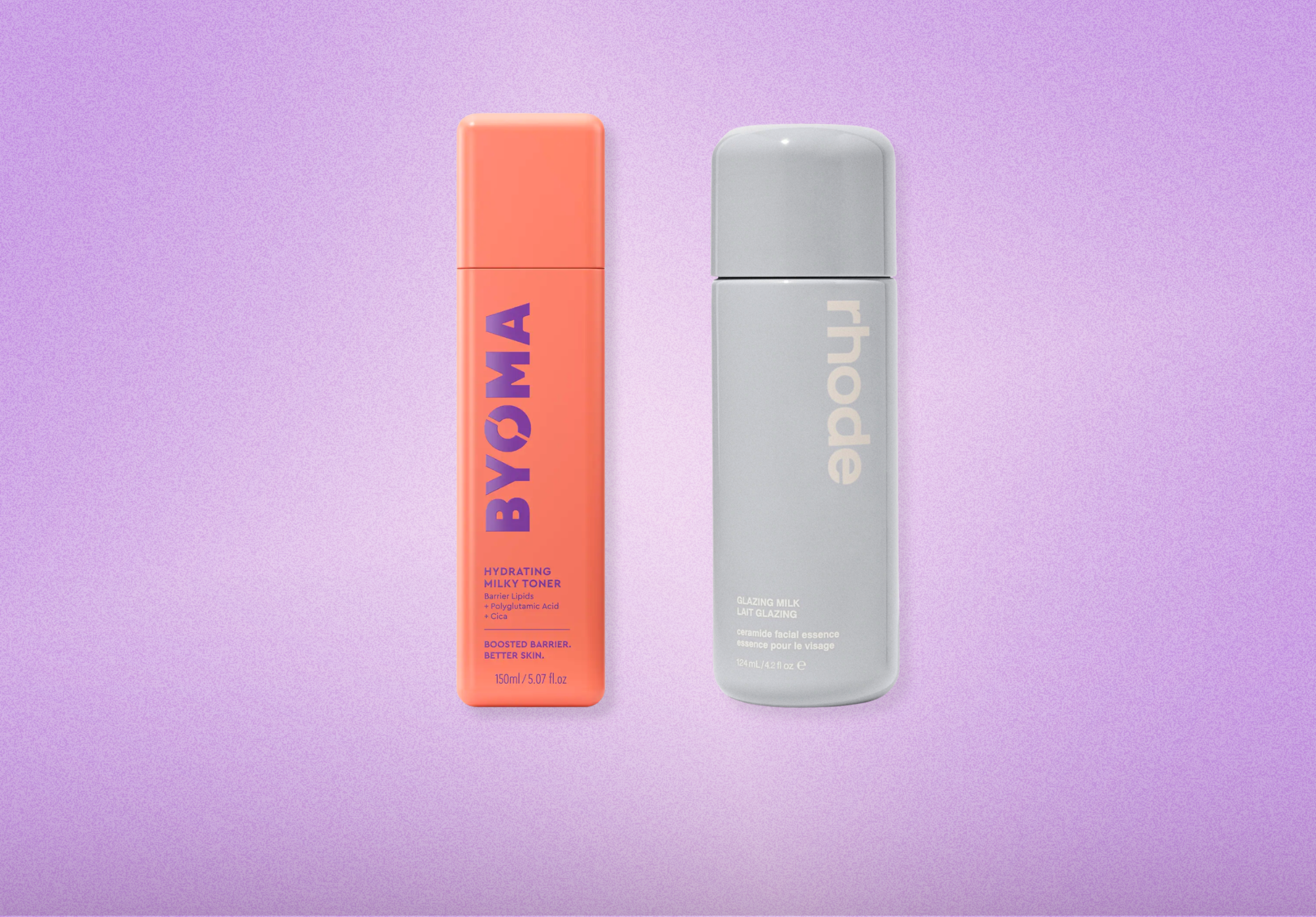
Milky toners have quietly taken over the skincare conversation, blurring the line between toner and essence with their lightweight textures and barrier-boosting promises. Designed to hydrate, soothe, and leave behind that coveted dewy finish, they’ve become a staple in routines chasing healthier, glowier skin. Among the many options on the market, two formulas in particular keep coming up: BYOMA’s Hydrating Milky Toner and Rhode’s Glazing Milk Ceramide Facial Essence. Both have quickly become some of the most talked-about products in this category—but do they actually deliver the same results? As a beauty editor who gets to test more products than I can count, I put both to the test to see how they compare.
Ingredient Breakdown: What’s Similar
Both formulas focus on hydration and barrier support, which is why they deliver that same soft, plumped, healthy-skin look.
You’ll find overlapping staples in both:
- Glycerin to draw moisture into the skin
- Ceramide NP to support the skin barrier
- Beta-glucan to soothe and calm irritation
- Hyaluronic acid (sodium hyaluronate) for hydration and bounce
- Vitamin E for antioxidant protection
The result: both will leave your skin feeling hydrated, comfortable, and slightly more plump—making them interchangeable at a very basic level.
What Makes Rhode Glazing Milk Different
Rhode’s formula leans heavily into barrier repair and that glazed, dewy finish the brand is known for.
Ingredients unique to Rhode:
- A ceramide trio (NP, AP, EOP) for more advanced barrier support
- Cholesterol + fatty acids that mimic your skin’s natural lipid barrier
- Multiple forms of hyaluronic acid for layered hydration
- A mineral complex (magnesium, zinc, copper) for added antioxidant support
- Emollients that give skin that signature glossy, glazed look
How it feels: slightly richer, more cushiony, and visibly glow-enhancing.
What Makes Byoma’s Milky Toner Different
BYOMA takes a more lightweight, soothing, and skin-friendly approach, making it especially appealing for sensitive or easily irritated skin.
Ingredients Unique to Byoma:
- Panthenol (vitamin B5) to calm and repair
- Centella asiatica to reduce redness and irritation
- Polyglutamic acid for intense hydration (even more water-binding than hyaluronic acid)
- Saccharide isomerate for long-lasting moisture
- Gluconolactone (PHA) for very gentle exfoliation
- Sphingolipids + ceramide NP for lighter barrier support
How it feels: thinner, more refreshing, and calming on the skin.
Final Verdict: Which One Is Better?
From my experience, the difference really comes down to texture, finish, and overall value.
The BYOMA Hydrating Milky Toner feels more lightweight with a thinner consistency, and it absorbs into the skin quickly. It’s easy to layer and works well in any routine without feeling heavy.
The Rhode Glazing Milk is thicker in consistency and gives more of a hydration boost. This is the one that delivers that glazed, glass-skin finish—something you don’t quite get with BYOMA.
Both formulas do what they claim, but they serve slightly different needs.
Rhode feels more elevated in terms of barrier-repair ingredients and finish, but it comes at a noticeably higher price. BYOMA, on the other hand, delivers a gentle, effective, and more accessible option that still covers all the hydration basics.
When you factor in value, the difference becomes even clearer.
BYOMA is $22 for 150 ml, giving you more product at a much lower price point.
Rhode is $48 for 124 ml, so you’re paying more for less.
Packaging-wise, neither is perfect.
The Rhode Glazing Milk dispenses more easily, which makes it quicker to use day-to-day. But the opaque bottle means you can’t see how much product is left, which isn’t ideal—especially at that price.
The BYOMA bottle isn’t the most functional either, and overall, both could be improved in terms of usability.
Which One Is Better?
Choose the Rhode Glazing Milk if:
- Your skin feels dry or compromised
- You want that glazed, glass-skin finish
- You prefer richer, more nourishing textures
- You’re focused on repairing your skin barrier
Choose the BYOMA Hydrating Milky Toner if:
- You have sensitive or easily irritated skin
- You want hydration without heaviness
- You prefer a lightweight, soothing formula

Rhode Glazing Milk Ceramide Facial Essence

BYOMA Hydrating Milky Toner
Disclosure: This product was gifted, but I am under no obligation to share a positive review. All opinions are entirely my own and based on my honest experience. This post also contains affiliate links; if you choose to purchase them, I may earn a small commission at no additional cost to you. This helps support the content I create. Thank you for your support!